

.jpg)
FROM ASSESSMENT TO REASSESSMENT.
A course of MeRT® treatment begins with an EEG-based brain assessment, followed by a personalised course of magnetic stimulation delivered across two phases: typically an initial two-week period followed by four weeks of continued treatment, with progress measured through follow-up EEGs at each stage.
A companion piece to “Why PTSD Doesn't End When the Traumatic Event Does.” That article explored the science behind PTSD and MeRT®. This one walks through what a course of MeRT treatment actually looks like, from first assessment to reassessment.
Understanding why PTSD lingers is one thing. Understanding what treatment actually involves is another and it's often the question that matters most to someone deciding whether to begin.
MeRT® (Magnetic e-Resonance Therapy) is built around a simple sequence: measure the brain, understand what the data shows, then personalise treatment accordingly. Here is what that looks like in practice.
MeRT may be considered for adults diagnosed with PTSD who continue to experience symptoms such as:
— Sleep disturbance
— Hypervigilance
— Intrusive memories
— Changes in mood
— Difficulty concentrating
Suitability is always determined through an individual clinical assessment, not through symptoms alone.
Before treatment begins, a clinician reviews symptoms, medical history, previous care and treatment goals. This establishes whether MeRT is appropriate and creates the clinical baseline that guides everything that follows.
The process begins with an eyes-closed, ten-minute, non-invasive EEG scan, conducted in a quiet, dimly-lit room. A resting qEEG records brainwave activity while an ECG records the heart's rhythm at the same time.
Together, this data reveals how the brain is functioning and provides the foundation for a personalised treatment approach. Non-invasive. Data-driven.
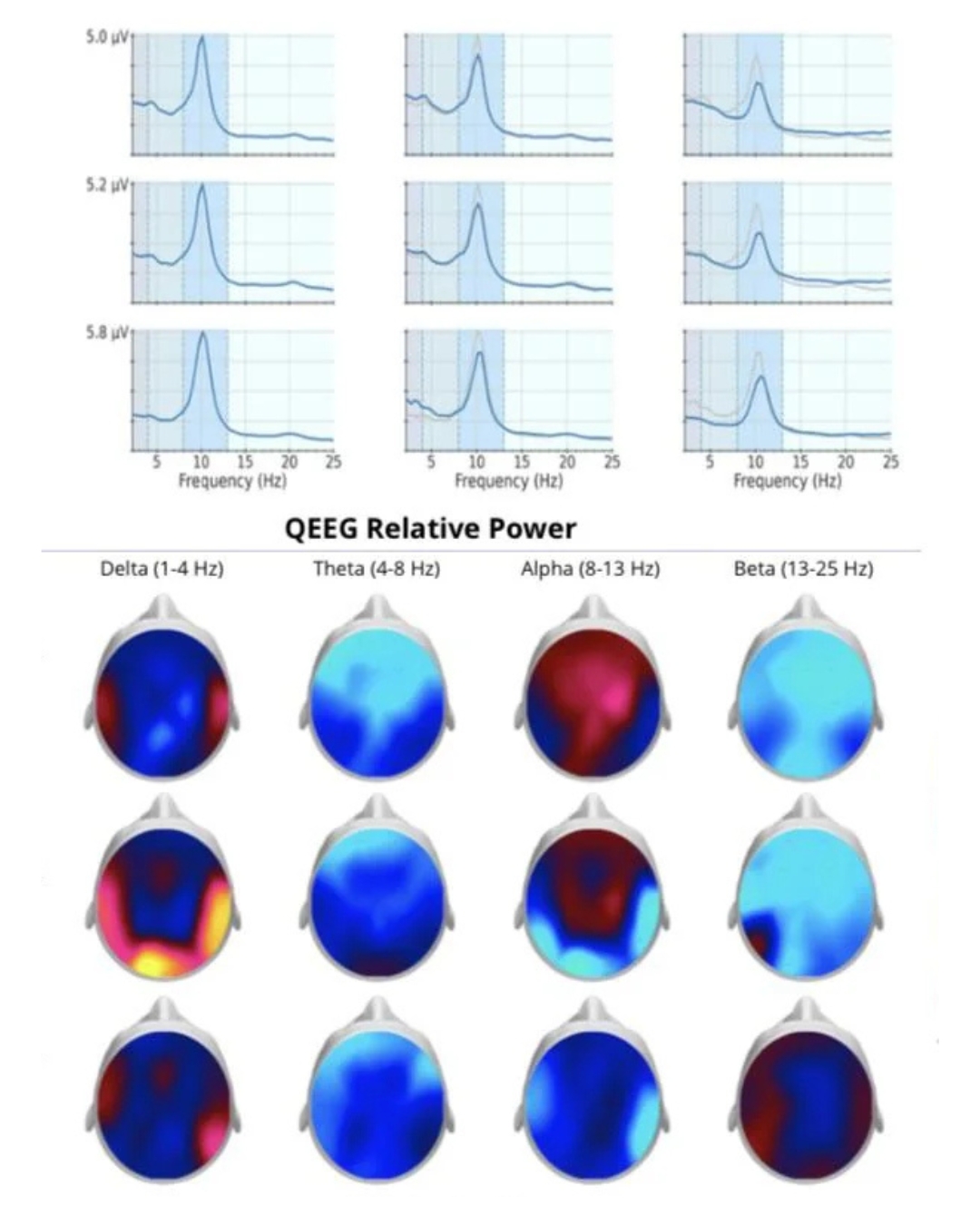
The recording is translated into a report and analysed to identify measurable patterns in brain function, including brainwave timing and synchrony. This gives the clinical team a report that helps establish a baseline, identify areas of dysregulation, and inform a more precise path forward.
Using the EEG and ECG findings, the system helps derive an individualised stimulation frequency. Rather than a one-size-fits-all approach, the treatment protocol is guided by the patient's own brainwave data. Measured first. Then personalised.
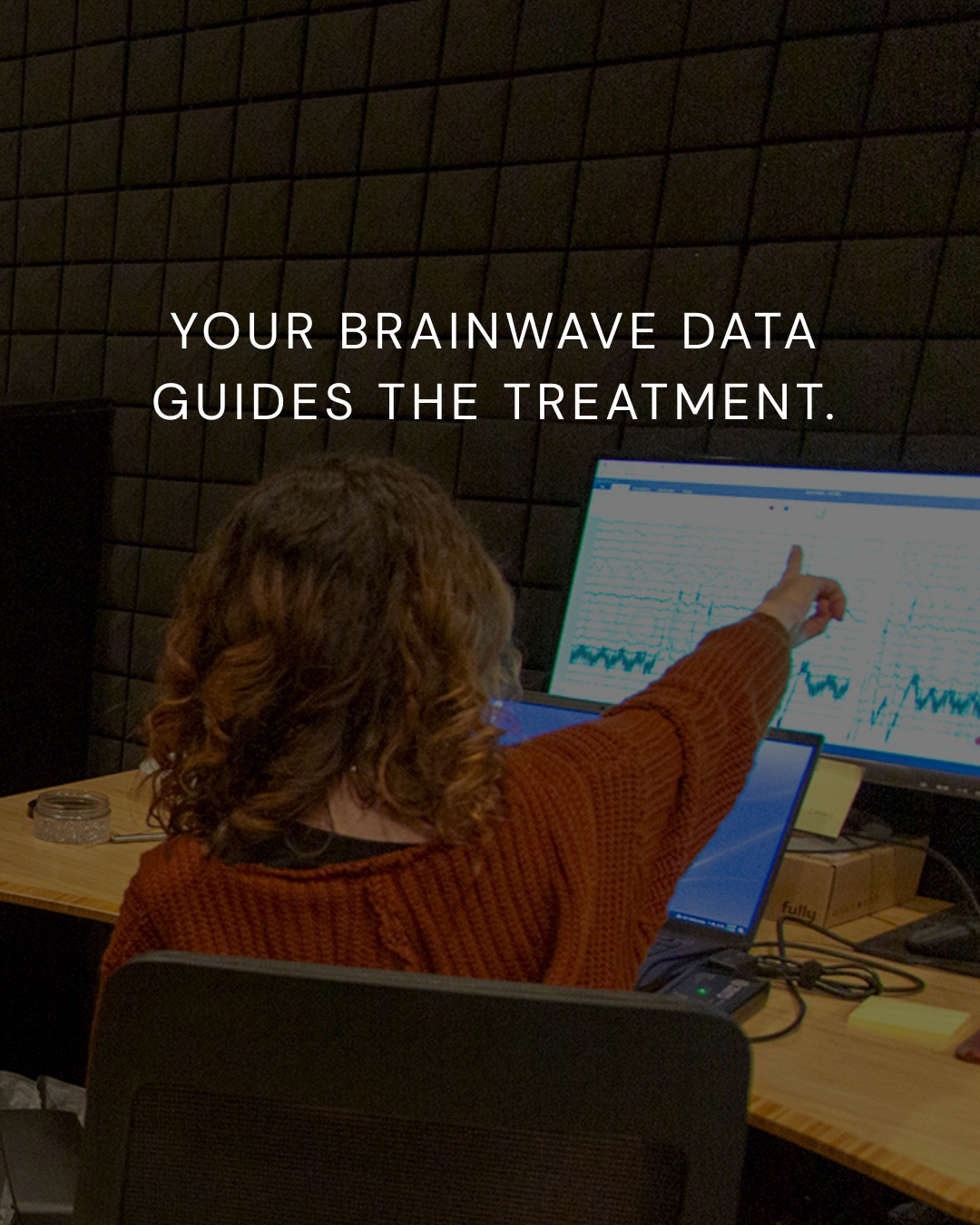
Magnetic stimulation is then delivered using the personalised treatment parameters developed from the assessment and brainwave analysis; gentle, targeted stimulation directed at specific areas of the brain.
MeRT® is FDA-cleared as an adjunctive treatment for adults living with PTSD.
Response to treatment is reviewed over time, and follow-up assessment is used to compare progress against the original baseline. Progress is measured, not guessed.
Phase 1. Initial treatment period (two weeks)
An EEG and clinical evaluation is followed by two weeks of personalised TMS therapy, then a further EEG and clinical follow-up. This follow-up EEG determines whether any adjustments are needed based on the individual's response.
Phase 2. Continued treatment (four weeks)
Treatment continues in further two-week blocks, each followed by an EEG and clinical follow-up. Response is monitored throughout by clinicians and neuro-technicians through sequential EEGs, and the protocol may be adjusted as needed to optimise effectiveness.
Exact timelines can vary by individual and are determined through ongoing clinical evaluation, not a fixed schedule.
MeRT® was developed by Wave Neuroscience and has been used across hundreds of thousands of treatment sessions to date. Its application to PTSD specifically has been studied in multiple clinical trials, including a completed multi-participant trial evaluating the safety and efficacy of MeRT for PTSD, alongside ongoing research examining EEG-guided neuromodulation in veterans, first responders and other populations affected by trauma.
MeRT reflects where brain medicine is heading: more measurable, more personalised, more precise. At Aurora Life, our mission is to remain at the forefront of longevity medicine, carefully selecting and introducing technologies that bring the future of health into clinical care. Because understanding how a treatment works is often the first step toward beginning it.
How long does a MeRT treatment course take?
Six weeks, typically two weeks of initial treatment, four of continued care, with an EEG follow-up marking every stage. The course is shaped around the individual, not a fixed calendar.
Is MeRT treatment painful or invasive?
No. It begins with a non-invasive EEG and ECG reading, and the stimulation itself is gentle, targeted magnetic pulses, nothing more.
How many EEG assessments are involved?
At least three, an initial reading, a follow-up after the first two weeks, and further checks through the continued treatment phase. Each one exists to confirm the protocol is still right, not simply to log progress.
Does MeRT treatment replace psychotherapy or medication?
No. MeRT works alongside psychotherapy and medication, not instead of them.
SOURCES
• U.S. Food and Drug Administration. 510(k) Summary: MeRT® System (K260402), June 2026.
• Wave Neuroscience. MeRT® System overview and treatment process, clinical resources.
• ClinicalTrials.gov. MeRT-005-B: Clinical Trial to Evaluate the Safety and Efficacy of MeRT Treatment in Post-Traumatic Stress Disorder (NCT02990793), Texas A&M, completed 2025.
• ClinicalTrials.gov. eTMS-PTSD-001: EEG Personalized Transcranial Magnetic Stimulation (eTMS) (MeRT) for Post-Traumatic Stress Disorder (NCT06081309), Wright State University, completed 2024.
• Frueh B.C., Crowder C., Taghva A. Individually guided neuromodulation in special operator veterans with symptoms of PTSD and traumatic brain injury. Frontiers in Neurology (2025).
By submitting this form, you consent receiving marketing messages from Aurora Life.



